
Filipino food industry workers and fishers struggle in precarious jobs with low wages, at the same time as natural disasters ravage their homes and politicians steal public funds.
The shoreline of the fishing village of Tangke is a bleak sight on a November day. Typhoon Tino swept across Cebu City three nights earlier, killing more than 200 people and causing extensive damage. Tangke escaped the worst, but pieces of destroyed buildings – timber, roofing sheets, and other debris – have washed up on its beach.
– The destruction from the typhoon turned out to be our salvation. With the timber and roofing sheets washed ashore, we can repair our own homes, jokes Joksan Branzuela, vice-chair of the village fishersfolk union, using the grim humor typical among Filipinos.
Tangke is a traditional fishing village near Cebu City. The fishers earn their living catching crabs. At dawn, they return from the sea and begin clearing crabs from their nets. They must hurry to sell their catch to middlemen, who then supply market vendors. At the bottom of the value chain, the fishers live on the edge of poverty. To supplement their income, they drive motorcycle taxis, do laundry, or run small kiosks.
Their livelihood is under threat from many directions. The expansion of a container terminal and construction of an oil depot risk destroying crab stocks and restricting access to fishing grounds. The fishersfolk’s union, together with Sentro, the national trade union center, has worked to make its voice heard and halt the project.
– All construction projects require an environmental permit, and we managed to overturn the permit for offshore construction of the oil terminal. The construction of the oil depot on land, however, may continue.
Commercial vessels also worsen the fishers’ situation when they illegally enter coastal waters.
– Commercial vessels are supposed to stay 50 kilometers away from what are called municipal waters, says Branzuela, who is studying law on a scholarship from Sentro.
In February, traditional and commercial fishers plan to establish a joint federation. The initiative is backed by Sentro, which aims to unite the fragmented Filipino labor movement.
– Building collective strength is the only way to increase bargaining power, emphasizes Sentro coordinator Rodel Abenoja.
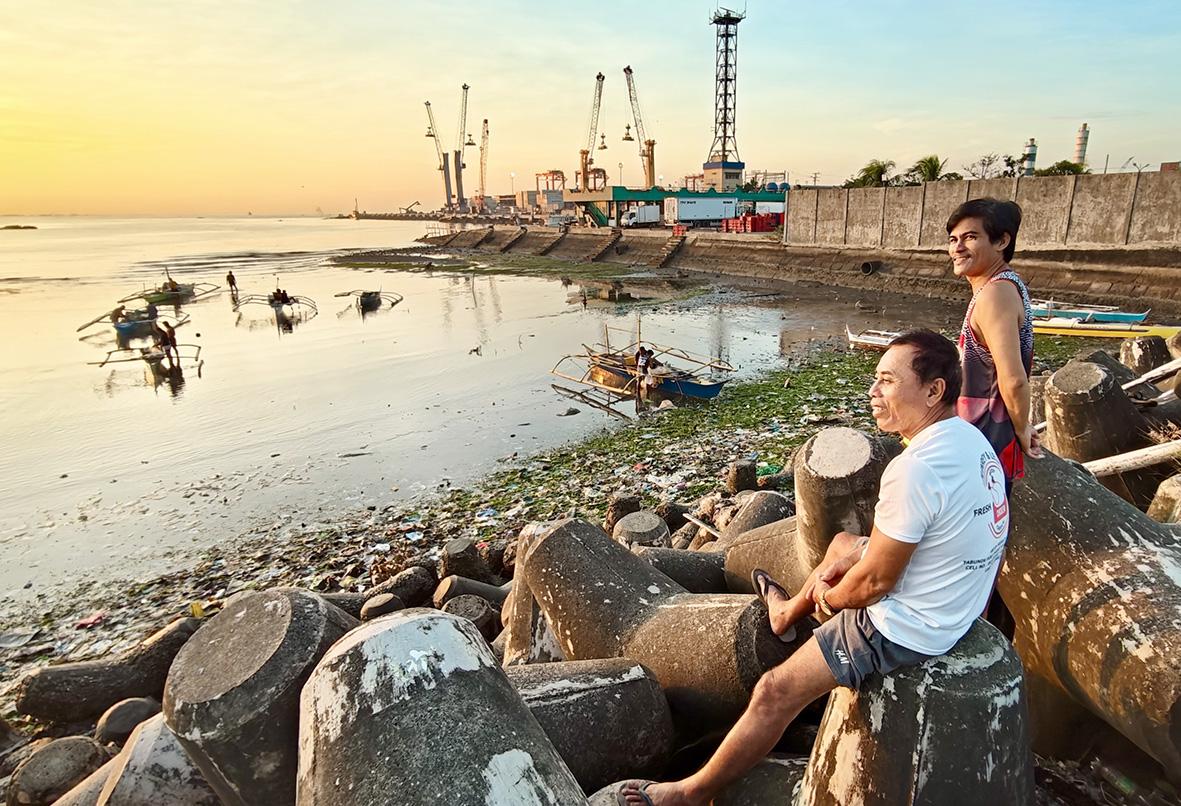
Tangke’s crab fishers return from the sea at dawn. The catch is usually 3–4 kilos, but it varies depending on sea conditions.
Grassroots organizing
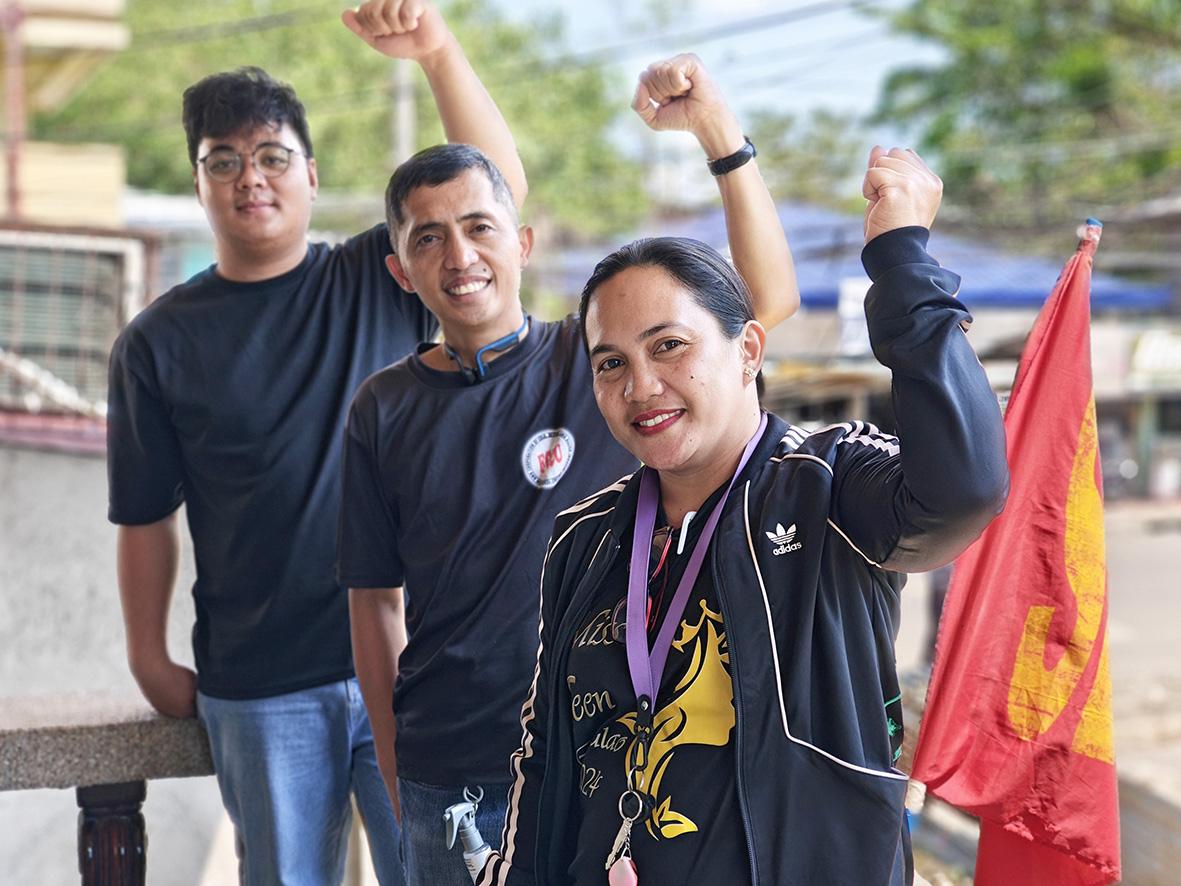
Jaijai Amboon is Sentro’s organizer in Cebu City, responsible for the food and beverage sector. The work is full of challenges. The Philippines remains one of the most dangerous countries in the world for trade union activists. Harassment, violence, and even death threats are real risks.
– Especially during former President Duterte’s term, demonization and red-tagging of the labor movement became more common, says Abenoja.
Amboon has focused his work on the Mandaue industrial area, home to many major food and beverage factories such as Coca-Cola, meat processors Belcris Food and Virginia, and noodle manufacturer Monde Nissin. His strategy differs from the workplace-centered organizing common in Finland; he works with employees in the communities where they live.
– First, we map out where a factory’s employees live. Then we start building connections within the community and identifying key people. At the outset, we don’t talk directly about union matters; instead, we approach the conversation through local concerns such as community issues, human rights, or climate change, Amboon explains.
– Because workers usually live in employer-provided dormitories, it’s not uncommon for employers to relocate them as soon as they hear about our organizing efforts.
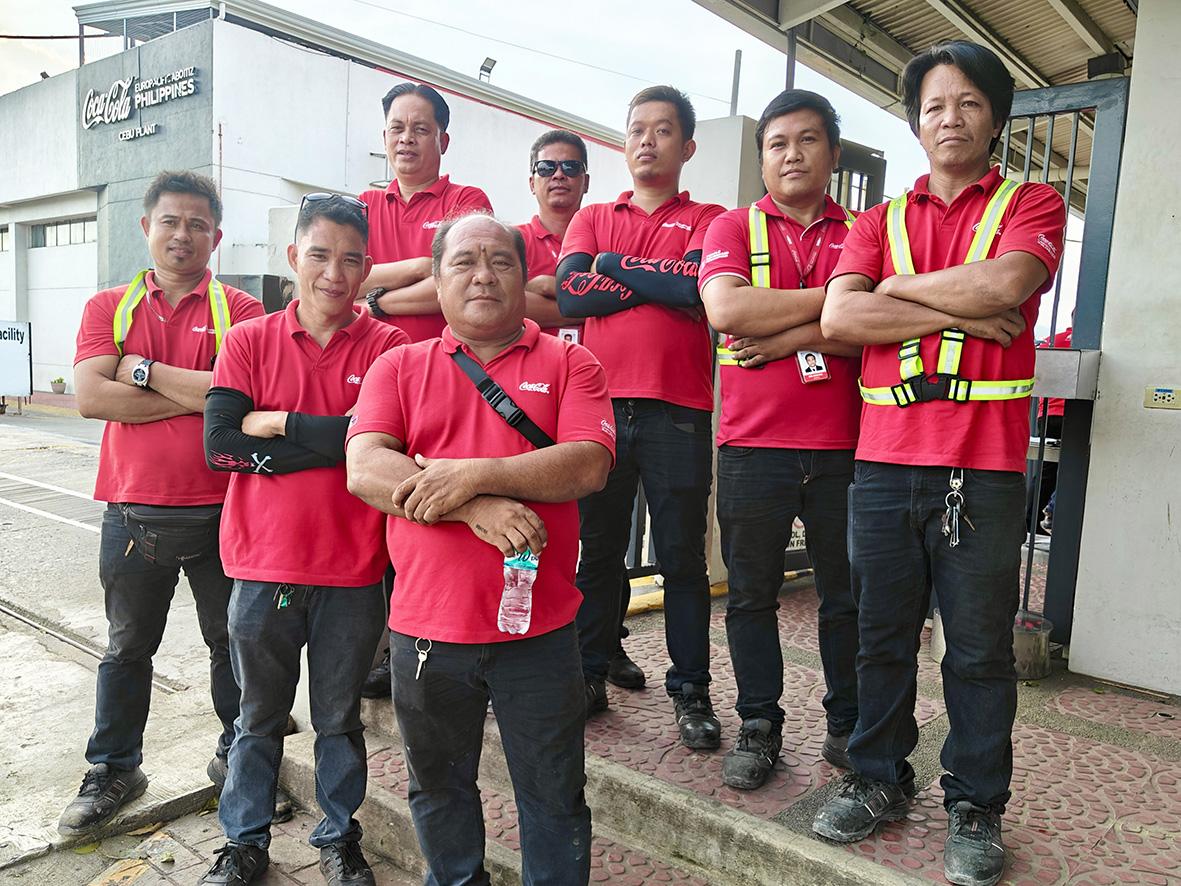
The independent union of Coca-Cola drivers won the union elections in Mandaue against an employer-backed yellow union.
Coca-Cola divides and conquers
– The water began to rise rapidly at around two in the morning. In just a couple of hours, it reached three meters, leaving Coca-Cola’s Consolacion logistics center completely submerged, says Roger Rivera, president of the Coca-Cola drivers’ union, describing the typhoon’s impact on Cebu.
Three days later, the logistics center remains closed, but Coca-Cola’s bottling plant in Mandaue escaped major damage and has continued production uninterrupted.
Coca-Cola Company is known worldwide for aggressively suppressing union activity. In the Philippines, this takes the form of a divide-and-rule tactic. Production, sales, and logistics workers each have their own unions. Workers are also divided into daily-paid and monthly-paid, as well as permanent and contract employees.
Another employer tactic is the creation of yellow unions – organizations that appear to represent workers but lack real bargaining power.
The independent union led by Rivera recently defeated such a yellow union in labor elections. In the Philippines, a union must receive more than half of workers’ votes to gain official bargaining status.
The union has a long list of goals for improving drivers’ wages and conditions. Its first priority is countering the employer’s divide-and-rule approach by uniting all drivers in Central and Eastern Visayas under one union and one collective agreement.
Rivera highlights job security as on of the most important issues. Drivers work on temporary contracts despite serving Coca-Cola continuously. The gap between temporary and permanent workers is large – especially in pay. Drivers are compensated based on the number of loads and pallets handled, with no guaranteed wage or waiting-time pay.
– At Coca-Cola facilities elsewhere in the Philippines, we have succeeded in negotiating contract workers into permanent positions. That is our goal here as well, explains Abenoja.
Currently, drivers earn roughly the regulated minimum wage. According to WageIndicator, Cebu’s minimum wage covers only about 65 percent of basic living costs.
With 35 percent missing, many drivers are forced to seek additional income by driving motorcycle taxis or working for ride-hailing services, and by turning to consumer loans. Debt is a growing concern. Loans are offered not only by banks and payday lenders but also by companies to their own workers.
Healthcare is another dividing line. Permanent employees receive full health insurance, while contract workers receive a lump-sum allowance that covers only part of their medical costs.
– I had to undergo back surgery, and the lump-sum reimbursement covered only a quarter of the costs. I had to borrow the remaining amount from the employer,” says Doroteo Enijada, a union board member.
The loan equals roughly two years of his income.
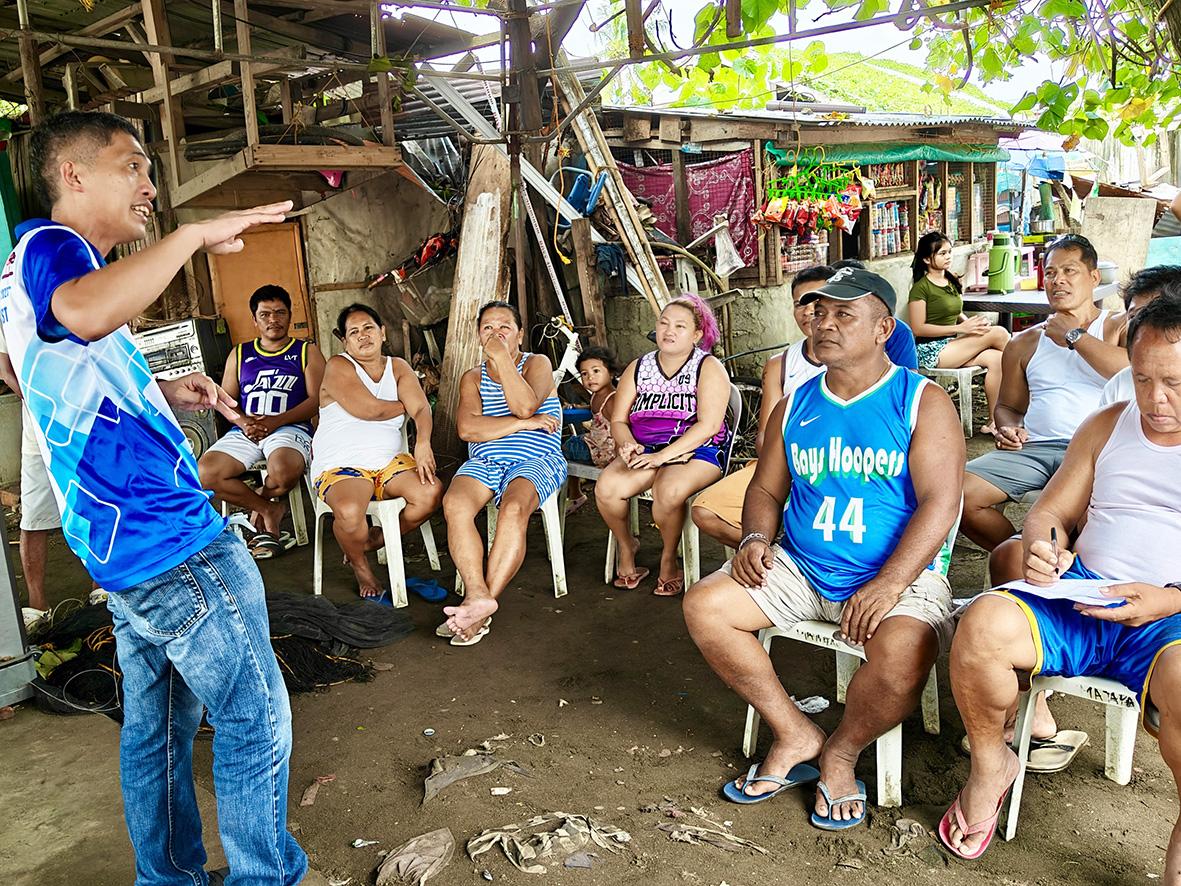
Rodel Abenoja brings greetings from Sentro to its member union. The membership includes both men and women, as many work as fishing couples.
The trillion-peso march
On Friday evening, a group of about twenty people gathers to protest at Fuente Osmeña Circle in Cebu City. They are part of a broad civic movement known as the “trillion-peso march”. Today’s group is small, as residents continue recovering from the typhoon and preparing for the arrival of another super typhoon.
The Philippines is currently shaken by a massive corruption scandal involving the misuse of flood-control funds worth tens of billions of euros. Corruption is not new in the country, but the scale this time is unprecedented.
According to the revelations, funds were funneled via ghost projects directly to politicians and favored contractors, while the projects themselves were never completed or never even begun.
The government has established an independent investigative commission, but citizens are furious and demanding action – accountability for those responsible and greater transparency in public spending.
The movement, in which Sentro is actively involved, plans to mobilize major demonstrations on November 30, 2025, the holiday honoring national hero Andrés Bonifacio.
“Even the possibility of a military coup has been mentioned. The military might use the corruption scandal and the deteriorating relations between the two political dynasties – Marcos and Duterte – as an opportunity for a takeover, says Sentro’s secretary-general Joshua Mata.
According to him, the labor movement is in a difficult position: it must defend democracy while avoiding actions that could deepen the crisis – even a fragile democracy is better than military rule.
Sentro and the Nordic Food Workers’ Union are partners in a solidarity project run by SASK, the trade union solidarity centre of Finland.
The project aims to improve the livelihoods, job security, and workplace safety of food industry workers in the Philippines.
Text and photos: Tanja Harjuniemi
In the main photo: Sentro’s coordinator Rodel Abenoja (center) coordinates the organizing work of Jaijai Amboon and Mardie Capuras in Cebu City.